
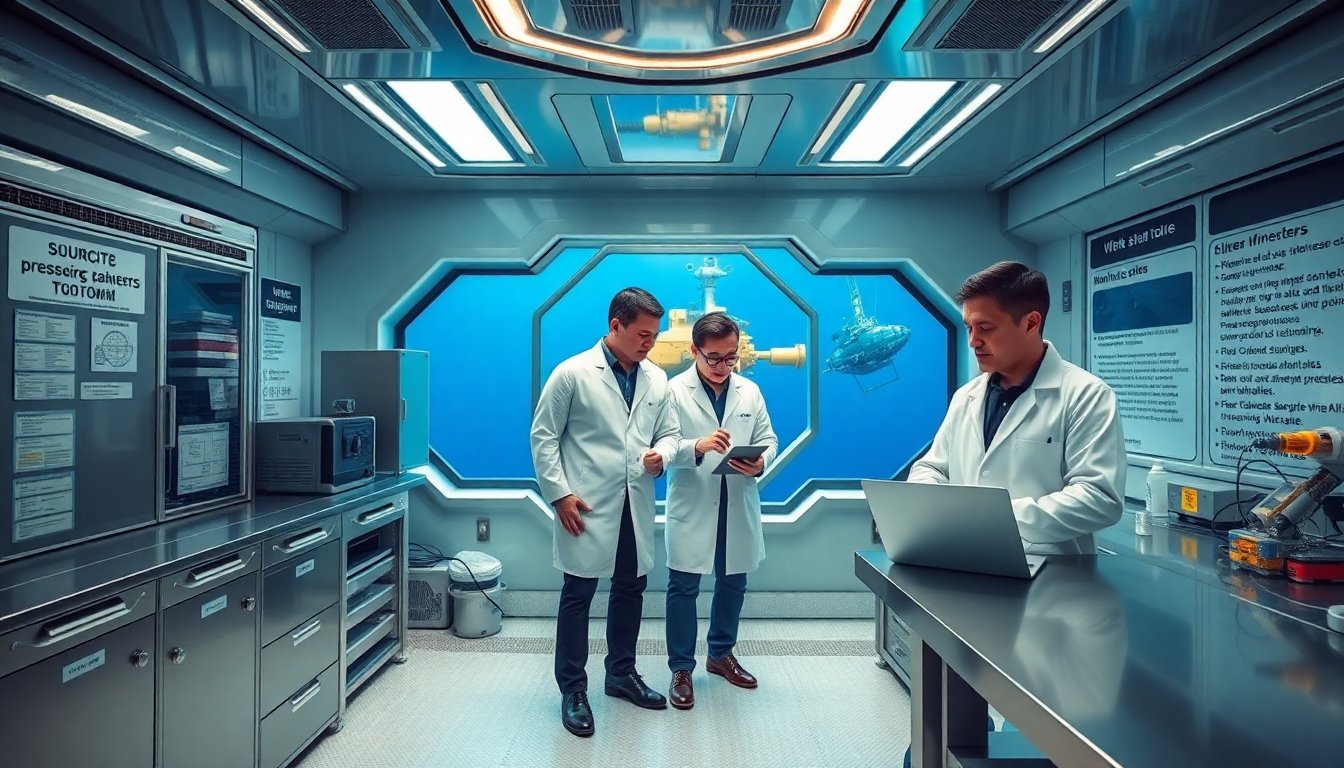
Betrabeso is an underwater biotech bunker that houses labs and living space beneath the sea. The bunker supports experiments that require pressure control and isolation. Scientists use the bunker to study organisms, genetics, and drug leads. The bunker shows a new path for research in 2026. The underwater biotech bunker betrabeso opened access to environments that surface labs cannot reach.
Key Takeaways
- The underwater biotech bunker Betrabeso enables advanced research by maintaining native pressure and stable conditions at 800 meters depth, improving study of pressure-adapted organisms and molecular processes.
- Betrabeso’s durable design features titanium hulls, redundant power, modular labs, robotic arms, and real-time monitoring to ensure safe, flexible, and efficient underwater biotech operations.
- The facility supports quick experiment initiation by drastically reducing sample transit times, fostering collaboration among marine biologists, bioengineers, and chemists.
- Strict regulatory compliance, ethical oversight, environmental monitoring, and transparency practices minimize ecological risks and build public trust around underwater biotech research.
- Betrabeso acts as a critical bridge between oceanography and applied biotechnology, expanding access to deep-sea environments surface labs cannot reach for novel scientific discoveries.
- Future-proof design allows phased expansions and upgrades without major drydock work, ensuring Betrabeso remains at the forefront of underwater biotech innovation.
What Betrabeso Is And Why An Underwater Biotech Bunker Matters
Betrabeso describes a sealed facility built on the seafloor. The underwater biotech bunker betrabeso sits at 800 meters depth near a continental slope. Engineers built the bunker to hold people, instruments, and sensitive materials under high pressure. Researchers use the bunker to keep samples at native pressure. The bunker reduces sample damage that happens during ascent. The bunker offers stable temperature and low vibration. These features improve data quality for physiology and molecular work. The bunker also shortens transit time from collection to lab analysis. Teams can start experiments within hours rather than days. The bunker helps teams study slow-growing microbes, pressure-adapted enzymes, and unique biochemical pathways. The facility supports collaborations between marine biologists, bioengineers, and chemists. The bunker includes modular lab suites aimed at cell biology, genomics, and small-molecule screening. The underwater biotech bunker betrabeso follows strict access rules. Staff rotate on fixed schedules to limit contamination. The design separates wet labs from genetic analysis rooms. The bunker keeps a full chain of custody for samples. The chain improves reproducibility and regulatory compliance. Funders and universities support the bunker because it expands research options. Private labs also lease bench space for focused projects. The underwater biotech bunker betrabeso acts as a bridge between oceanography and applied biotech.
Design, Infrastructure, And Core Technologies Powering The Bunker
Design teams prioritized durability and redundancy for betrabeso. The underwater biotech bunker betrabeso uses titanium hulls and composite bulkheads. The hull resists corrosion and supports internal pressure. The bunker includes layered seals and emergency valves. Engineers placed backup power systems in separate compartments. The bunker runs on primary grid power from a shore cable and on battery banks for failure modes. The facility uses fiber links for high-bandwidth data transfer to land. The bunker hosts modular rack systems for instruments. Scientists can swap sequencers and mass spectrometers on short notice. The bunker stores cryogens in specially shielded lockers. The bunker also houses an on-site wet lab for culturing and a clean lab for molecular work. The underwater biotech bunker betrabeso features robotic arms that operate on the seafloor. The arms collect samples and assist in equipment repair. The bunker uses remotely operated vehicles for extended surveys. The facility employs machine vision to inspect structural surfaces. The bunker integrates real-time monitoring for hull integrity, oxygen levels, and microbial loads. The systems alert staff via secure links. The bunker follows ISO-class standards for laboratory layout and biosafety levels. The design allows future upgrades without major drydock work. The underwater biotech bunker betrabeso plans phased expansion modules that attach to existing hulls.
Regulatory, Ethical, And Environmental Risks — Mitigation Strategies
Regulators require permits for offshore biotech work and for genetic work at sea. Betrabeso pursues national and regional permits before deployment. The underwater biotech bunker betrabeso works with coastal authorities and with environmental agencies. The team commits to public reporting and independent audits. They publish environmental impact statements and monitoring plans. The bunker uses baseline surveys to compare local biology before and after operations. Engineers design spill containment and fail-safe isolation systems. The bunker keeps neutralization reagents on site for accidental releases. The facility limits experiments that pose high ecological risk. An ethics board reviews projects for environmental and dual-use concerns. The board includes external scientists, legal experts, and community representatives. The bunker also follows data-privacy rules and biosafety norms. The team restricts access to sensitive protocols and uses multi-factor controls for lab systems. The facility conducts tabletop exercises with regulators and rescue teams to test emergency response. The bunker funds local conservation programs and scientific outreach. These programs pay for independent monitoring and for training local technicians. The underwater biotech bunker betrabeso publishes results and raw data when possible. Transparency builds public trust and helps regulators evaluate risk. The bunker pursues adaptive management. The team adjusts operations based on monitoring results and on advances in safety science. The approach aims to reduce environmental impact, to meet legal obligations, and to keep research viable for future work.


