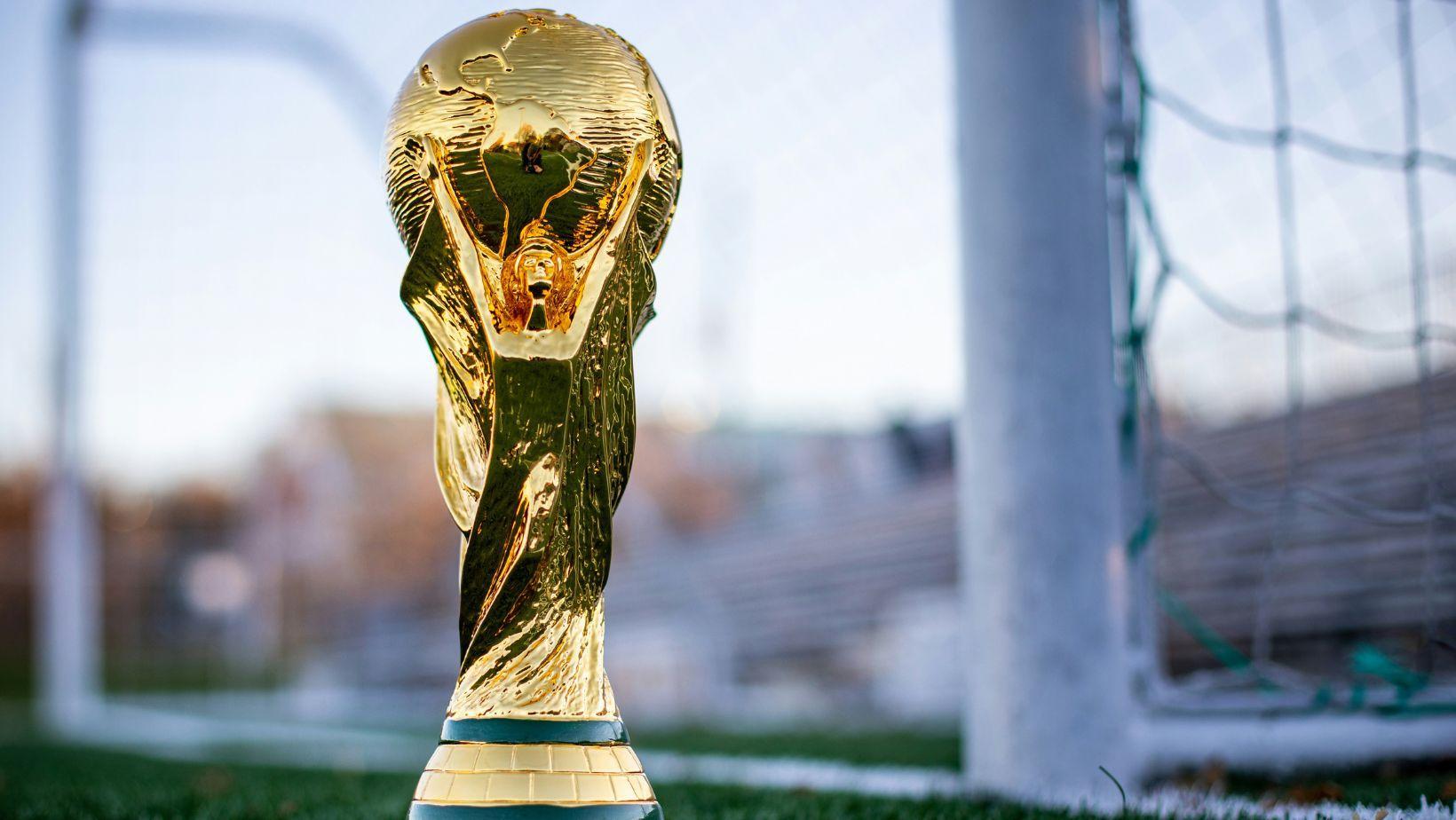
World Cup 2026 is the first World Cup in history to feature 48 teams. That may mean the odd snoozefest (or several), and it does mean there’s less jeopardy in the group stages: eight third-place teams progress to the knockouts, meaning only 16 teams exit after the first stage.
But a large tournament also means that there’s more room for underdogs, minnows, and players we might never have heard of. What teams should you keep an eye on, who are their best players, and who are their group stage opponents?
Cape Verde
Cape Verde has a population of around 500,000, but the tiny nation had enough quality footballers to beat Serbia in a recent friendly. They also beat Cameroon on their way to the World Cup, which has been called perhaps the most important moment in the nation’s history (football, sport, or otherwise). The Blue Sharks don’t have the easiest group – in fact, they have one of the toughest: tournament favourites Spain, Uruguay (who don’t have quite the quality of some previous squads but can still call up Jose Maria Gimenez, Rodrigo Bentancur, Federico Valverde, and Darwin Nunez), and Saudi Arabia, who upset Argentina in 2022.
Rather unsurprisingly, the bookmakers consider Cape Verde to be one of the weaker teams. They’re 2000/1 underdogs to win the World Cup, suggesting they are of a similar standard to Qatar and Panama. They do have players who European football fans might know: Roberto Lopes of Shamrock Rovers and Logan Costa of Villarreal. Ryan Mendes is the country’s most capped player and top goalscorer.
Curacao
Curacao are another to make their debut and have some players Premier League and Championship fans may be similar with: there’s winger Kenji Gorre and midfielder Tahith Chong, both playing in by far the biggest tournament of their lives. Curacao have arguably a slightly easier group: Germany (not their usual selves, priced at around 16/1 to win the tournament on most sportsbooks), Ivory Coast, and Ecuador.
Ivory Coast for many years were one of Africa’s strongest nations but they’re considered weaker than Senegal and Morocco, both seen as 150/1 underdogs to take the trophy (despite Morocco’s run to the semi-finals four years ago). Fans of African nations who did not make it to the tournament, such as betting Zambia supporters, may be surprised to see teams like Austria and Sweden ranked ahead of Ivory Coast. The latter called up several former and current Premier League players: Amad Diallo, Evann Guessand, Nicolas Pepe, Ibrahim Sangare, and Jean-Michael Seri.
Curacao is seen as even more unlikely than Cape Verde to win the whole thing, at around 5000/1 (the same as Haiti).
Egypt
While Egypt have far more footballing history than the above two nations, they are still huge underdogs, priced at around 600/1 to become kings of the world. They would be the first African nation in history to do so, but there are two good reasons why that isn’t entirely impossible: Mohamed Salah and Omar Marmoush. The (now-former) Liverpool and Manchester City players will be helped in attack by Trézéguet, who plays his club football back in his home country with Al Ahly.
In 2018, Egypt lost all three of their games, before failing to qualify for 2022. But they made the semi-finals of the Africa Cup of Nations earlier this year, and might fancy their chances against Belgium, Iran, and New Zealand.